Simon Memory Game Challenges Your Memory Without Screens
This post may contain affiliate links. Please read ourdisclosure policy
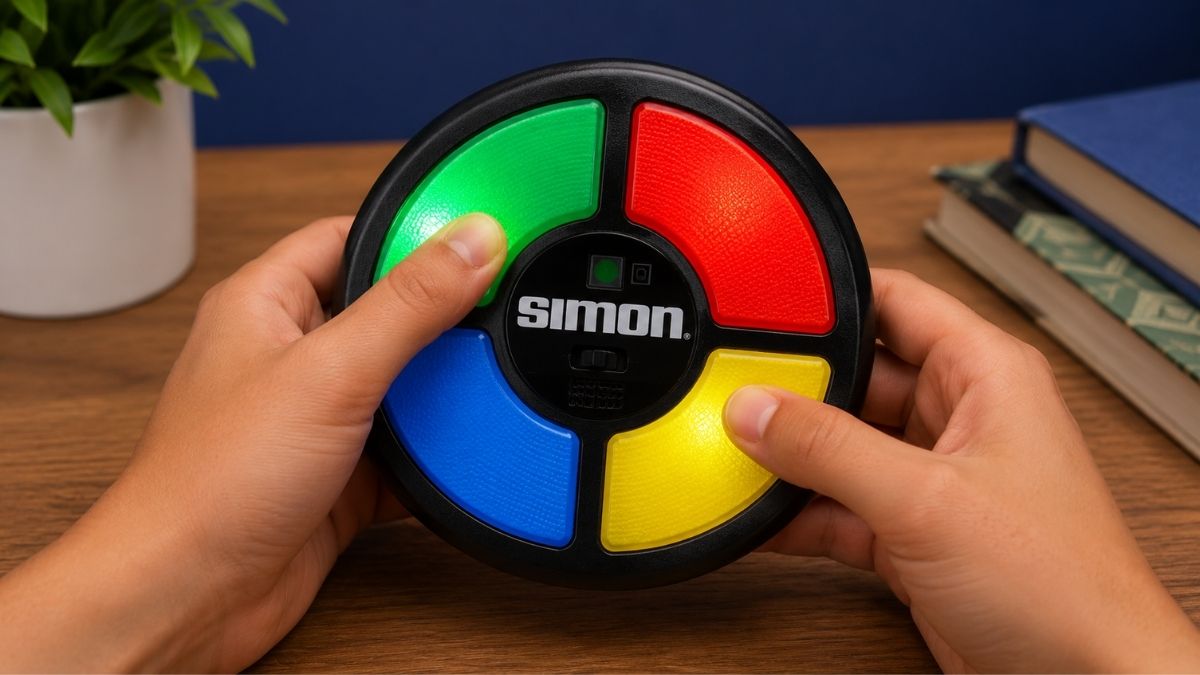
The Hasbro Simon Handheld Electronic Memory Game has entertained players since its debut in 1978 by combining simple gameplay with an increasingly difficult memory challenge.
Your goal is to watch a sequence of flashing lights and sounds, then repeat it by pressing the matching colored buttons in the correct order. Each successful round adds another step, requiring greater concentration and faster reactions.
Although today's entertainment options often revolve around screens, Simon offers a refreshing offline alternative that encourages focus, memory, and pattern recognition. Before deciding whether it's the right choice for your household or as a gift, it's worth considering both its strengths and its limitations.
Why Has Simon Remained Popular
Simon has endured for decades because nearly anyone can learn the rules within minutes while still finding the gameplay challenging over time. The automatic increase in difficulty keeps each session engaging. Key features include:
- Four illuminated colored buttons with matching sounds
- "Watch, Remember, Repeat" gameplay
- Automatically increasing difficulty
- High-score tracking
- Compact handheld design
- Randomized sequences for strong replay value
Because every sequence is generated differently, you are continually challenged instead of simply memorizing fixed patterns.
Can Simon Help Improve Your Memory
While Simon is primarily designed for entertainment, it also encourages you to practice several useful cognitive skills. It should not be viewed as a medical brain-training tool, but many players appreciate the mental challenge. As you continue playing, you naturally exercise:
- Short-term memory
- Pattern recognition
- Concentration
- Visual and auditory recall
- Reaction speed
Children often enjoy the learning experience because it feels like play rather than structured practice. Adults may also appreciate using Simon as a quick mental exercise during breaks or while traveling. Individual results naturally vary, and becoming better at Simon does not necessarily improve every aspect of memory. However, many players enjoy challenging themselves while developing greater familiarity with increasingly complex patterns.
Portable Entertainment for Home and Travel
One of Simon's biggest strengths is its convenience. You do not need an internet connection, downloads, or complicated setup before you begin playing. Its handheld design makes it practical for:
- Road trips
- Airplane travel
- Waiting rooms
- Family gatherings
- School breaks
- Quiet evenings at home
The game operates using three AAA batteries, with demo batteries included for immediate use. Once those batteries run out, you'll need replacements to continue playing. Its lightweight plastic construction also makes it easy to carry in a backpack or travel bag.
Who Is Simon Best Suited For
Simon is recommended for players aged eight and older, but its simple design appeals to a wide range of ages. You may enjoy Simon if you are:
- Looking for screen-free entertainment
- Buying a gift for a child or teenager
- Enjoying classic electronic games
- Interested in memory challenges
- Traveling frequently
- Seeking quick family-friendly activities
Although Simon is fundamentally a single-player game, family members can take turns trying to beat each other's high scores. That friendly competition often adds to its replay value.
Key Advantages and Possible Drawbacks
Like most classic games, Simon offers several advantages alongside a few limitations that are worth considering before purchasing.
The Biggest Strengths of the Simon Memory Game
- Easy to learn
- Portable and lightweight
- Suitable for children and adults
- Encourages concentration and memory practice
- Durable construction
- Randomized gameplay supports replayability
- Highly rated by thousands of customers
A Few Drawbacks to Keep in Mind
- Single-player gameplay only
- Requires AAA batteries
- Difficulty increases quickly during longer rounds
- Limited game modes compared with newer electronic games
- Some users have occasionally reported button responsiveness issues after extended use
Whether these drawbacks matter depends on your expectations. If you want multiplayer gaming or multiple play modes, other options may offer more variety. However, if you enjoy straightforward memory challenges, these compromises may be relatively minor.
Is the Simon Memory Game a Good Choice for Your Family
Whether Simon is the right choice depends on the type of experience you want. If you enjoy quick games that reward concentration, memory, and steady improvement, it continues to deliver the same engaging formula that has entertained generations.
Its portability, straightforward controls, and replay value make it suitable for travel, family gatherings, or short breaks without relying on digital devices. At the same time, it is important to recognize that Simon focuses on one core gameplay style. Players looking for cooperative play or a wider variety of modes may prefer newer electronic games.
Even so, if you appreciate timeless gameplay that remains challenging through skill progression rather than complicated features, Simon remains a dependable choice. If you're interested in classic electronic games, educational toys, or thoughtful presents for children and adults, browse Amazon for more gift ideas, family games, and portable entertainment options.